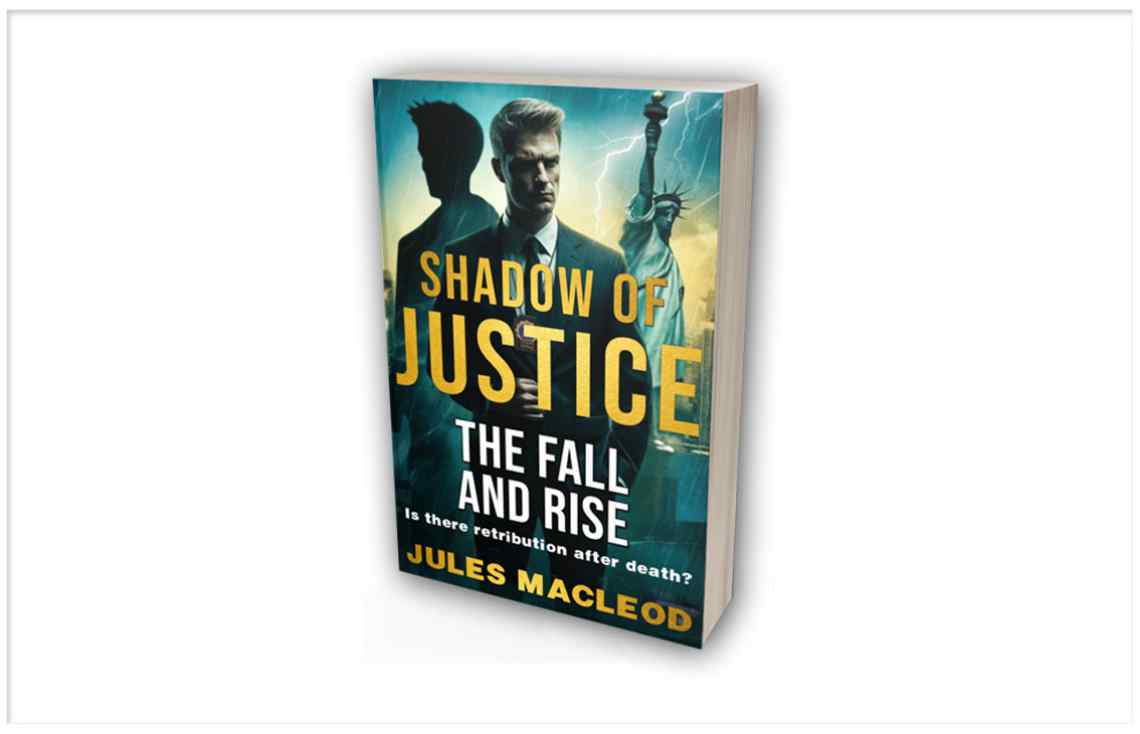
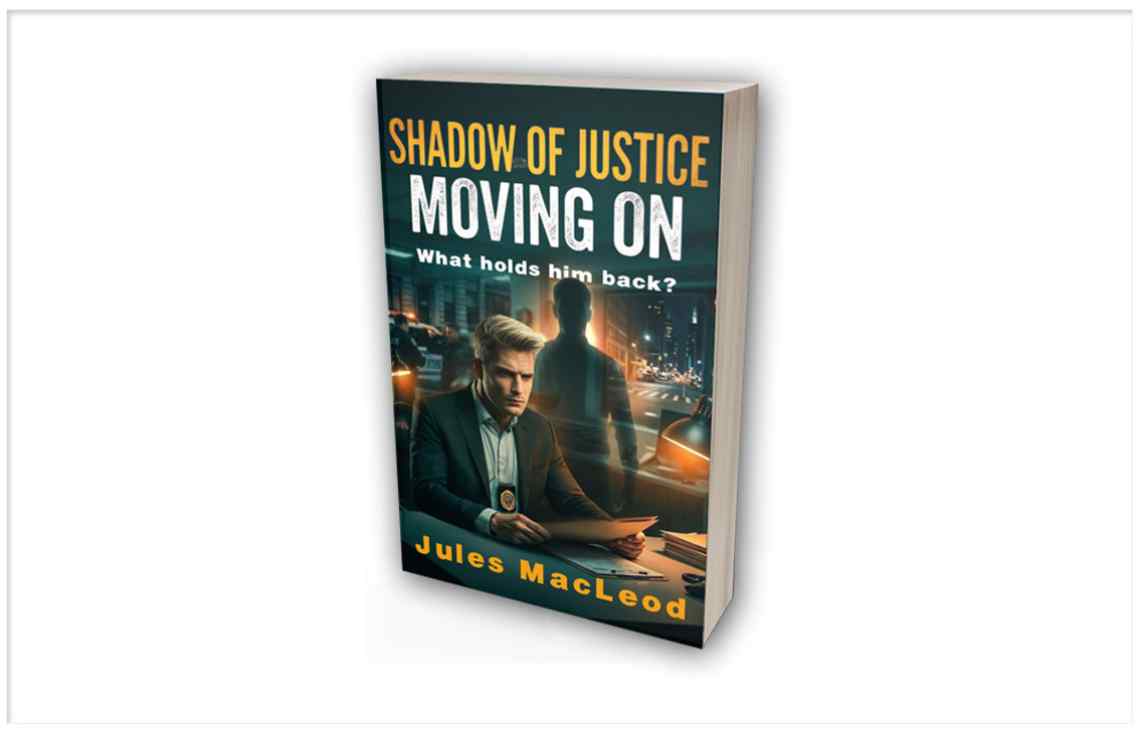
A Shooting
Someone shoots Detective Robert Cooper in cold blood as he enters his apartment block during the early hours of the morning—the NYPD officer is shot by an unknown assailant.
A Shadow
A strange occurrence leaves Detective Josh Watson in utter disbelief and confusion and makes him question his sanity. Never the less, he begins to look into his partner's shooting, ignoring his captain's warning not to.
Is There Justice
Will Josh discover the identity of the perpetrator and can he bring the criminal to justice?
Whodunnit and do they pay for their crime?
Prologue - The Fall
THE ASSASSIN WAITED as the man he intended to murder sauntered through the New York streets, the full moon casting a shadow behind the victim. Fewer people walked the sidewalks, the traffic lighter in the early hours of the morning. Perfect for the kill. Maybe the guy was heading home. He didn’t care.
A yellow cab drove by, splashing through a puddle.
The mark danced and shimmied left, then right down the avenue, a lazy grin playing on his lips. The club’s bass still pounded in his chest, no doubt. Wine, warm in his gut, for sure. The scent of perfume probably clung to his skin. He danced as if he didn’t have a care in the world. Quite the carefree bachelor, despite being in his thirties, according to information. The assassin could only imagine how he would show Hugh Hefner a thing or two in thirty years—if he lived. But he wouldn’t. Couldn’t. If not tonight, then another. The mark had to die.
He would normally never take risks like this.
The assassin moved between pools of darkness, following his target, each footstep unheard, each pause measured. Stalking. Waiting. Moving when safe. He wove through the shadows, having trailed the playboy from the club to the woman’s apartment, then onward. He reached back and checked his gun remained at the small of his back. A neon bodega sign flickered as he passed it.
The mark reached into his jacket pocket.
Was the victim close to home? His pulse quickened. He took hold of his gun with a tight grip before slipping it into his jacket. His target crossed the avenue. The assassin kept a careful distance—close enough to be sure his victim would die, but far enough so the mark would not hear. He wore dark sneakers and clothing to ensure stealth. There could be no escape for him. He couldn’t risk the man talking, and there should be no witnesses, he hoped, at least. Normally, others did the wet work for him, but he couldn’t let his employees see him falter. The shipment was paramount, and he would look like a fool if they didn’t deliver on time. This man might connect the dots.
The victim stopped and checked himself out in a storefront window as a subway train rumbled by below. He dragged his fingers through his hair, then blew an air kiss to his reflection. How vain. He moved on and spun around a streetlight like Gene Kelly, grinning. The light rain fell, but he carried no umbrella. He sure wasn’t singing, either. On his second spin, he let go, momentum carrying him toward an alley.
The assassin narrowed his eyes and dashed across the road, slipping past a twenty-four-hour deli and into the scaffolded sidewalk gloom. He eased forward. His prey danced down the alleyway and turned right onto the main street, carefree. He followed at a distance. Fewer shadows fell on the brighter street, but he moved with silent confidence. He could almost smell blood, his trigger finger twitching. He paused as the victim crossed another road, now wary of the brighter avenue with more CCTV cameras.
Fate intervened as the target retrieved his keys from his jacket and stepped up to the front door of an apartment block.
It was now or never.
Screw CCTV. He has to die.
He crossed the road quickly, slipped into the shadows, then raised his gun and took aim as the mark pushed the key into the lock.
The assassin’s breath steadied. His finger squeezed. The silenced gun sounded
Chapter One
JOSHUA WATSON STAGGERED down the corridor toward his apartment. He fished out his keys and squinted at the lock, scratched at it several times before opening the door, then stumbled inside. He lurched to the well-worn couch, flung his badge and gun down, and collapsed beside them. The last memory from the bar was of him staring at his reflection: fatigue on his face, shadows pooled under bloodshot eyes, and a vacant look. He could still taste the burn of his last whiskey that clung to his breath.
The stuffy apartment closed in around him as the noise from his neighbor’s TV bled through the thin walls—the noisy asshole. His head dropped to his chest, muscles aching. The alcohol sat heavy in his gut, amplifying the day’s burden; his composure had frayed and then some, his hands shaking. He wanted to cry, but thirty-three-year-old homicide detectives didn’t do that, did they? Not even for Bobby—Coop, to everyone else at the station—his partner of four years. The crime scene report had read: The witness found Detective Robert Cooper dead, shot in the back, outside his apartment block in Flushing, Queens, at 05:30. The predicted time of death is between 01:30 and 04:00. A more accurate time was not possible due to the rain-soaked body and effect on liver temperature.
Had it only been five days since Bobby died? It seemed more like five months. He’d attended the damn funeral earlier that day. Rain had slicked off his hair beneath his dress uniform cap as he’d stood in the ranks, crisp salutes slicing through the downpour, the NYPD moving in lockstep tribute—the kind of service the department was famous for. Bobby would have hated every second.
No, Bobby would have loathed it.
He caught a glimpse of himself in the full-length mirror: his hair stuck up in uneven tufts, eyes heavy above five days of stubble. Was his hair still blond? He couldn’t tell because of the grease in it. Might well be gray with all the drinking. He glanced at a picture of himself at a work function. His crumpled, grimy clothes clashed with that normal well turned out appearance. Who gave a damn? Sure as hell not him. His gaze drifted around the apartment, and it reflected his state: dirty dishes drowning in the sink, whiskey bottles strewn around the place, clothes sprawled everywhere, all evidence of how low he’d sunk. He sniffed—the odor of the dishes in the sink and sour, empty takeout containers did nothing for his mood.
A conversation in the locker room as they had prepared to leave the station one morning popped into his mind:
“Did you hear that prick on the lectern this morning, Josh? ‘Let’s be careful out there,’” Bobby had said. “The man thinks he’s on a TV show!”
“Yeah, well. That’s just his style. You know that,” he had replied.
“Well, he can take that style and shove it where the sun don’t shine. Anyhoo. You should have seen this hottie I screwed last night. An eleven out of ten for sure. My legs are still weak. At it all night we were.”
“That dick of yours will get you in trouble one day, Bobby,” he’d replied.
The memory faded, leaving a small grin. Man, Bobby had hated Granger, and hadn’t he just loved the ladies?
The TV next door went quiet, and the rain deepened the silence as the grin slipped away, the steady patter pushing him further into the couch. Its rhythm echoed the funeral’s solemn march, the cold, wet day still fresh in his mind. It hadn’t reflected Bobby’s character: confident, lovable, cocky. Bobby would have found it depressing. He’d always thumbed his nose at the department’s strict hierarchy and showed no patience for red tape. He did things his own way, unapologetically. Some called it “Coop style.” They should have played “My Way” at the service. He could almost picture the look of disdain Bobby would’ve thrown at the ceremony. The service embodied the strict regime he detested—a symbol of conformity. During the event, his friend’s murder and the motive behind it weighed on him. Who the hell had shot Bobby and why?
And the damn memories wouldn’t leave him alone either, popping up when he least expected.
The recent clash with the captain came crashing back. Better than lingering on Bobby, for sure. He heard Granger’s voice clearly in his mind:
“You take time off, Watson,” the captain had growled.
“I don’t need a vacation, Cap. I need Bobby’s killer found.” He’d fixed the captain with a stare.
Granger had turned his head away. “I get that. It’s not up to us, and you damn well know it. Whoever killed him did it in the one-oh-nine precinct. It’s their jurisdiction. The one-oh-nine are heading up the investigation.”
“Bobby was one of ours!”
“Yeah, I get that too. You don’t have to tell me!” Granger had turned back to face him, locking onto his eyes. “I want the bastard found as much as you, but we follow procedure, Watson. It happened on their patch, so they’re handling it, and they’ve warned me to keep you away from their case. You’re not to interfere, understand?”
He’d narrowed his eyes. “What would you do if your partner got gunned down?”
The captain had pointed a finger at him. “Keep out of it, Watson. I mean it. If I find you interfering … don’t even think about it! I’ll suspend your sorry—whiskey-soaked by the smell of it—ass. Not like you, heavy drinking. Anyway, you’re off active duty until you see the station’s psychologist. Regulations, Watson. Clear?”
The memory passed, but its sting remained. He’d pushed the case—and everything else—out of mind since. That staggered him in moments of clarity. Why did he have to spend the days drinking, only to go through the same five questions at the end of each session? The questions that haunted every minute of every hour of his day, drunk or sober: Who’d you been with, Bobby? What did you do? Who shot you? Why did they shoot you? Why, dear God, sweet Jesus, why? No one could help him. Only he could help himself. But how? How could he rid himself of the memory of Bobby? Only by finding the perp. The one who pulled the trigger. He had to be brought to justice, or it would eat him alive.
The building’s heating pipes clanked while a door slammed on the floor above as he pulled Bobby’s badge from his pocket, the weight reassuring. The scent of leather mingled with the whiskey on his breath. The shield brought back one of their sparring sessions at a dojo near the station—karate, their shared interest. A faint smile touched his lips. The smile vanished. He shook his head, dropped the badge on the couch, and sagged. His body ached from head to toe. He held a hand to his stomach as he rubbed his temple to stop the room from spinning.
He shuddered, a sudden chill making him shake his head. His skin prickled. Was there someone in the room with him? He opened his eyes and grabbed his gun in one swift motion. Drunk or sober, months of training, and years of doing kicked in. He sat up and aimed at the intruder. No way. It couldn’t be him.
Chapter Two
JOSH BLINKED HARD trying to clear his vision. Bobby stood there in his den, solid and cocky as ever. He’d seen them lower the coffin that day, for Christ’s sake. This wasn’t happening.
Bobby beamed a wide, toothy grin and said, “Hey, buddy. Guess who?”
He jerked back, his finger pulling the trigger. The shot cracked through the air, the acrid tang of discharged gunpowder biting the inside of his nose. The bullet passed through Bobby, punching a hole in the painting behind him.
Bobby flinched, then straightened, one corner of his mouth curling upward with that same cocky ease Josh remembered. “I still hate the smell of gunpowder. Ewe. You really messed up that picture of Central Park. I loved that painting. Good job you live in a sleazy neighborhood, or you would have our brothers from the PD breaking down the door!”
He sat frozen, staring.
Bobby’s grin widened, looking even more amused than he ever had in life. “Josh, what’s wrong? You look like you’ve seen a ghost. Oh, right, you have—me.”
“Wha … wha—” Josh stammered.
“Wha, wha,” Bobby mimicked. “You sound like a frickin’ duck. Come on, it’s me, Bobby. Your buddy.”
He shook his head again, trying to dismiss the vision before him, but kept the gun trained on the illusion.
Bobby released a drawn-out sigh. “Okay. I’ll just make myself comfortable while you recover. Sober up, dude,” he said, sauntering over to a worn-out chair and sinking into it, expelling another long breath.
He tracked Bobby’s every move, his grip tightening as the gun’s weight turned leaden, hand trembling. “I don’t believe this. Can’t be happening,” he muttered. “I’m upset, maybe stressed. Has to be something like that coz I ain’t seeing this. I’m suffering from post-traumatic stress is all. Yeah, PTSD, and the booze. Has to be.”
He dropped the gun and lurched to his feet, the room tilting. After staggering to the dining table, he poured a generous glass of whiskey before gulping it down. He let out a burp, then turned slowly, a cold weight settling in his stomach.
Bobby remained.
“Can’t be real. I’m not seeing this,” Josh said.
“Yeah, you kind of are.”
He poured another and drank it as fast as the first, then slammed the tumbler down. The mix of whiskey and gun smoke turned his stomach. Nausea rolled up his throat. The floor wavered beneath him, a cold sweat breaking out. He turned and scanned his surroundings, jaw clenched.
Bobby remained.
He staggered closer to the delusion. It bore an uncanny resemblance to Bobby, but it wasn’t real. Couldn’t be. He’d seen them lower the coffin, for Christ’s sake. He regarded Bobby’s wide grin—pure amusement. His friend studied him. He stretched out a tentative hand, unsure if he should touch his dead partner. No, he wasn’t there.
Was he dreaming, or caught in a nightmare?
He approached the lifelike replica with care, hesitant to touch the facsimile. His fingers slipped through Bobby’s form, and a chilling sensation ran down his spine. He yanked his hand back and let out a startled yelp, stumbled backward, and collided with a small coffee table. He fell, the loud thud of his head hitting the floor echoing through the apartment.
Everything went black.
Chapter Three
THE FOLLOWING MORNING, Josh pried his eyes open, wincing as each pulse hammered through his skull. The pungent reek of his own body filled his nostrils. He lay on the floor, confused as the alarm blared from the bedroom. What was he doing there? His muscles protested as he rolled from his side onto his back. He squinted, straining to focus as flashes of the night before flickered in and out of reach. The memories hit hard, like a freight train. His eyes darted around the room before he let out a long sigh. Alone, thank God. He pulled himself up from the floor and steadied himself before lurching forward.
“I have to stop drinking.”
He stumbled to the dining table, steps uncertain. He winced as he passed his NYPD shield on the couch. Brooklyn-born and bred, with a badge line going back to his great-grandfather, he’d never once imagined he’d wind up talking to his own illusions. Had to be the drink and stress from losing Bobby. After raising his arms, joints popping, he glanced at the full-length mirror. Was he still six-two? His reflection seemed shorter.
Warm morning sunlight filled his apartment, a stark contrast to the rain the night before. Jeez, what a din from outside: horns, sirens, people screaming at each other, birdsong. Yeah, quite the symphony. New York, baby. He opened a bottle of pain medication, his hands trembling as he shook out two pills and tossed them back, eyes burning.
A noise from the kitchen startled him. Sweat slicked his palms and beaded along his forehead.
As he neared the door, the hairs on his arms stood rigid, his heartbeat thudding faster. “I don’t believe this. No!” his words stumbled out, his voice barely above a whisper. “This ain’t happening.”
Bobby lifted his head, his smile reaching his eyes. “Afraid so, pal. I ain’t going anywhere. You really tied one on yesterday. Clean yourself up, dude.”
“I’m seeing things. It’s just stress,” he said as his vision blurred, then cleared a moment later.
Bobby grunted. “I’m no hallucination, buddy. Delusions don’t do this.” He grabbed a mug and flung it at Josh. “See?”
Josh caught it, his eyes focusing on the NYPD logo on the side. He stared at the mug, too stunned to consider its irony. What the hell? The mug slipped from his hand and fell to the floor, breaking the handle. His eyes dropped to the mug below.
“I don’t get it. Why are you here?” he said, then turned his eyes toward the delusion of his dead friend. But Bobby wasn’t there. Had he blacked out with the hangover, walked into the kitchen, then lifted the mug? It was his normal routine for sure. Coffee, always first. But why was he standing where he was?
Bobby appeared where he’d been a moment ago and shrugged. “Beats me. Maybe they sent me to sort out your whiskey-soaked skull.”
“What are you here for?” Why was he talking to his own imagination?
“Dunno. Guess someone above,” Bobby said, glancing at the ceiling, “thinks I have unfinished business.”
He threw up a hand and said, “Like what?”
“I guess to find my killer. Must be that.”
He pressed his fingers to his temples; the ache pressed back harder. “You shouldn’t be here. You should be up there,” he said, pointing up, then continued, “dancing with the angels.”
The hallucination lifted its head and smiled.
“Or down there?” he said, glancing down at the floor.
“I’m not going down there,” Bobby said, gripping the crucifix around his neck. “I wear this cross for a reason, and it ain’t decoration. You dig?”
He turned his gaze back to the illusion of his friend, held out his hand, palm up. He said, “I can’t believe this. It’s stress, that’s all. I need a vacation. I refuse to accept it’s happening. I ain’t talking to no ghost.”
“No, Josh. It’s I ain’t ‘fraid o’ no ghost. Who ya gonna call? Ray Parker Junior?”
Josh left the kitchen and headed for the bathroom. A shower would clear his aching head and restore some sanity.
As he stepped out of the shower, he glimpsed himself in the mirror. Who the hell was that man? Sure as hell wasn’t him.
Ten minutes later, he dashed out, skipping breakfast, trying to ignore the lingering hallucination. So much for the shower clearing his head.
———
Outside, Josh slid into the car where his uninvited passenger sat. His black 1960s Mustang usually got a moment of appreciation. Not today. Not after last night. He started the engine and revved. The throaty sound drowned out Bobby’s incessant pleading as he continued to disregard his departed friend. Illusion? Delusion? Sure as hell wasn’t real.
Bobby went quiet.
In contrast with his dark thoughts, the sun blazed overhead, so he adjusted the visor and reached for his sunglasses. He tried hard not to show how his hand trembled. Why though? What the hell was with these DTs, anyway?
Bobby sat in the passenger seat, arms crossed with that same cocky grin he’d worn since day one. Probably plotting how to annoy Josh into listening to him. No, he wasn’t real. He needed to get a grip.
A conversation popped into his mind, Bobby’s words ringing clear: “I bounced between dead-end jobs before this gig, you know. The force saved me.” That was when they first partnered up. Four years later, they were inseparable. Brothers, almost. He once called him Shorty, even though Bobby stood just two inches below his own height.
Over the years, his friend had recounted his life story to Josh: Bobby grew up in Queens, where cultures clashed and instincts beat rules. The streets taught him more than the academy ever could, or so he always claimed. Protocol meant nothing—he’d bend it, push boundaries, and somehow get results. Josh never understood how Bobby got away with half of what he did at work. He hadn’t joined the force for glory. He’d signed up to clean up the city, even if it meant breaking rules, and that was his mission. Bureaucracy? It drove him nuts. His way, his rules, his choice. Surrender to rigidity, stupidity, and convention? Hell no.
Josh operated in contrast: methodical, hunched over files, dissecting inconsistencies. His mind worked like a puzzle solver. Where Bobby relied on gut instinct, he trusted the process. At the precinct, colleagues flinched when his words cut sharp, but they listened. To them, he was sure he came off as a straight shooter. He’d heard they called him By-the-Book Watson.
Bobby’s nickname came with a smirk—Saint Josh.
Their methods clashed, styles collided. But together? The best versions of themselves.
Bobby piped up again, starting a running monologue during the ride. Josh cranked up the volume. Metallica’s Phantom Lord drowned him out. How ironic. Eventually, his voice faded. Thank God.
Bobby was probably the best partner he could ever have hoped for, and hadn’t he been the yin to Josh’s yang? Opposites that clicked. Bobby, the rogue detective, and prankster, known at the station as Rogue-One Coop: him, the rule-follower. But as a team, they worked. Best stats in New York City, and the awards didn’t lie, baby.
He’d seen how women leaned in when Bobby spoke, drawn by the grin and easy laughter. He never went home alone and never with the same woman. The combination of brown hair and slate-gray eyes worked for him. Forever and commitment? To him, it always seemed like a fool’s game the way Bobby saw it. But now? Maybe even Bobby couldn’t outrun forever.
A horn honked. Man, he shouldn’t have driven in that state. What state, though? The hangover, the delusions, or the grief? Or the guy sitting next to him, who wasn’t really there? Probably all of the above. But they paid him to turn up. Despite the hangover, his New York traffic instincts kicked in. Sure as hell wasn’t child’s play. He nearly dinged some cars on too many occasions. New Yorkers loved their horns, and he could tell which ones were honking at him.
For just a second, he let himself believe his friend was there, and oh my lord, wasn’t he just as restless in death as he had been in life? He’d always figured Bobby got his fix from danger: skydiving, rock climbing, motor racing. The faster he lived, the more alive he seemed. Beneath the flaws, Bobby possessed a good heart. A slightly dark one at that, but good. If anyone needed help, he was the guy they would call. He had all the right attributes: street smart, sharp instincts, able to connect with anyone. And most of all? He had proven himself to be one hell of a detective. Unconventional, sure—but brilliant.
He threw the car into park and exhaled through gritted teeth. The station loomed ahead, normal, routine—but nothing about the day seemed normal. He tried to focus on the station door, but his vision blurred again. His hands gripped the wheel tighter, knuckles aching.
What if Bobby never left? No, he couldn’t accept it. He wasn’t there. Period.
“I ain’t going anywhere, Josh. You better get used to me.”
It was as if he could read his mind now. Jesus. But if delusion plagued him, then Bobby was speaking within his own mind. He ignored the idea and stepped out of the Mustang, his gut twisted, because for the first time, he wasn’t sure who he would enter the station as. Detective Josh Watson, or one of those crazies they arrested on the streets?
“Now, let’s go have some fun,” Bobby said, his lips curling into a smile—pure mischief. Typical Bobby, like he’d never left. This was always where things went sideways when Bobby said anything like that. But he wasn’t there, was he? Surely not?
Chapter Four
IN THE STATION HOUSE, Josh bumped into Captain Granger.
Granger glared at him. “You seen the psychologist yet?”
“I … no, but I—”
His superior held up a hand. “I don’t want to listen to excuses. You stay off active duty until you get the all-clear from the shrink.”
The captain marched off and headed toward the squad room while Bobby stared after him. “I always hated that son of a bitch. He got right up my nose. Someone needs to remove that stick from his ass.” Bobby turned to his friend. “I have an idea. Follow me.”
Bobby followed Granger as the captain prepared to speak to his detectives.
Despite his decision to ignore his friend, he tagged along. Why though? Bobby wasn’t there, was he?
His colleagues were bustling around with the usual hubbub, getting ready for the morning meeting, and his captain was at the lectern. Desks cluttered with stacks of papers and whiteboards with case notes greeted him. Nothing ever changed, including the light gray walls that contrasted with his favorite color, gunmetal gray. Well, one thing had changed: Bobby—standing there like a ghost who’d missed his exit—seemed out of place. But was he there? He stood around two feet behind the captain as he closed his morning address, catching Josh’s eye with a playful wink and a mischievous grin.
Before finishing, Granger’s gaze swept over them. “… call it in if you see anyone matching the description. We need this guy off the streets. Just one more thing …”
Bobby stepped forward and entered the captain’s body.
The captain paused for a beat and stared before he shouted, “I wear adult diapers.”
One detective choked on his coffee mid-sip, spraying the contents from his mouth. The rest stiffened, exchanging glances before laughter erupted.
Bobby left the captain.
Granger flushed as his sharp green gaze, behind smudged glasses, darted from face to face. His glare continued to sweep the room, but Josh swore there was a flicker of confusion in the man’s eyes, as if he didn’t know where the words came from.
No one dared hold his stare.
Granger’s gray mustache twitched as he ran his hand through cropped gray hair, before turning and marching away.
Was he seeing Bobby or losing his mind? He used to laugh at Bobby’s pranks, but at that moment, acid crawled up his throat as his fingers curled into fists. Did Bobby just do that to Captain Granger?
Delusions alter perception.
Granger, though? What a dick he was, coming off as petty, vindictive, impossible to please, and thriving on making people squirm. And man, he took pleasure in their discomfort. Most officers wore kid gloves around him. Not him. He’d heard that Granger climbed the ranks using guile, not talent, thanks to a well-placed friend, and spent his career punishing those without the same privilege. It didn’t surprise him. He’d also heard the captain had been raised by a drunk who beat his mother. Perhaps his wife had left him for the same reason? He could only guess that he’d learned early that power meant survival. He figured the man had become what he knew—hard, cruel, and despised.
Bobby sauntered over as he chuckled. “Well? I got the Cap there, yeah? He’ll scratch his noggin for days. Eh, Josh?”
“What the hell just happened, Bobby?” he said, shaking his head.
So much for ignoring the delusion.
“I paid Granger back for laying into you, buddy.”
He glanced over Bobby’s shoulder as Granger made his way to the office. The captain carried himself with rigid authority, his bulk shifting with each step, jaw clenched in a permanent grimace. “Does this face look bothered to you?” was his favorite saying. No one ever answered. Despite the many nicknames whispered behind his back, the favorite remained: Granger the Hun.
Josh left the squad room, exited the station, and headed out onto the street. He glanced over his shoulder. The delusion was following him. God damn it. Delusion or apparition, though? Like apparitions existed—yeah, right. Give him scientific proof any minute of the day. Heaven and hell? Ha, religion, designed to control the masses. Ghosts? Stories to scare kids and nothing more. Give him rational and provable any day. Sure, good and evil existed, but it was ground into people. Parental DNA and upbringing and very little else. They couldn’t change it any more than they could change their skin tone. Respectable people existed, of course, but sure as hell not behind the police tape. Whenever he encountered someone decent—or seemingly so—he remained skeptical, always considering ulterior motives. The simple truth stood plain. Trust no one: the job bred that into him, and the streets were his teacher. To him, mental illness meant excuses—a shield for the weak. Was he now one of them? Have to admit weakness to a stranger? To the shrink?
He hurried down the street—man, he needed a drink. He ignored Bobby as he stuck to him like a shadow, following him to a bar. The establishment wasn’t his usual choice for a taproom, but it was the closest one to the station.
He settled onto a barstool, the buttery scent of popcorn drifting thick in the air. He took in the vibrant colors and upbeat music—was he in a 1980s theme bar? By the looks of the old-school wall-mounted jukebox, and the nostalgic tunes filling the air, yeah, he was. Cool.
So what was with these delusions then? He had to be suffering from post-traumatic stress disorder. Bobby couldn’t be real. Suffering from something, for sure—insanity, maybe? Madness? He fully expected grief, but never considered how deeply it would affect him. Not this, nor the feelings that came with it, as if a bleak future beckoned him to step forward. Perhaps going to see a psychologist might not be such a dopey idea after all. But he didn’t believe in psychology either—the very thought. He focused on logic and provable facts, not theories that centered on your mother and breastfeeding.
He waved a hand at the bartender and ordered a large whiskey. The guy behind the bar checked the clock on the wall. His eyes drifted past him, unfocused. He knew the time, and didn’t need the bartender’s silent nudge, like some fool who’d lost track of the hour.
As he took a long swig, his friend studied him, jaw tight. Bobby’s hand drifted to the cross around his neck, fingers twiddling with it. One of his habits when worried. It was oddly human.
“I’m going to miss that. I miss a lot of things, but that more so,” Bobby said, his gaze fixed on the whiskey.
He ignored him and stared straight ahead into the mirror, rather than look at the illusion of his friend.
Bobby ran his fingers through his brown hair as he glared at him. “You’ll have to acknowledge me sooner or later. I’m not going anywhere! I won’t stop until I convince you.”
He shut his eyes, gripping his glass, as if he could silence the faltering part of his mind. He opened them to see Bobby bang a fist against his forehead. Mischief was brewing in his stare as far as he could tell—time to up the ante, no doubt.
Bobby made his way through the bar toward a man sitting alone.
Where was that clown going? Was he going to do something to that dude with the tablet? Christ no. No, stop it. That clown wasn’t there. He shook his head as Bobby approached the guy. Despite himself, he couldn’t help but gawp as the delusion of his friend advanced on the man and entered him. The guy went rigid for a moment. The Bobby-stranger turned toward him, then stood and collected the device. He approached and placed the tablet on the bar.
Josh flinched as a shiver ghosted over his arms.
“So, your name is Joshua Watson,” the Bobby-stranger said with a smile. “I was your partner for a little over four years. You were born September 19, 1990. You got divorced, hence, you have no kids, and basketball is your favorite sport. Your go-to plate is steak. You’re allergic to peanuts, and you have a mole on your butt.”
He stared at the man and reached out, his fingers pressing against firm muscle, unlike before, when they slipped straight through Bobby in the apartment. He jerked his hand back as he took in the impossible reality. “This isn’t happening. I don’t believe it.”
“Remember the Freeman case? I held a gun to the rapist’s head and forced him to admit where he stashed the body. He told his lawyer, and they tried to get the evidence thrown out. So we claimed he was lying, and the judge believed us. Without it, we had nothing to prove it was him.”
“Yeah, all true. But if I am hallucinating, I’m giving myself information I’m already aware of, you dig? So, no way, pal. I’m still having trouble believing any of this can be real.”
“Okay. I thought I’d get a response like that. Shame you’re so technophobic, or it would make it easier. I’ll give you a fact about me. Something I never told you. Info you will be able to verify on the internet.”
He winced at the truth: a confirmed technophobe, for sure, and used the internet for work only when necessary.
“You remember I played basketball in high school, right?” Bobby said.
“I recall. But that’s not a fact I’m not already aware of, dude.”
“You got me on that one, Josh. But I never told you I was captain of the team in my final year. I was also their star player. We made the state final in 2008, and beat NY Basketball High with ninety-six points. We beat them by three points. I scored seventy-two for the team.”
Josh stared, his lips parting, then closing. He said nothing. Basketball was the sport Bobby excelled at when younger, that much he was sure of. But hell, what that man had just said was new information.
“You wanted information to verify. You got it, and those are facts, so check them out. Now, be the excellent but technophobic cop you are and look it up on this tablet. I’d suggest using chatAI, but that would just freak you!” With a swift motion, the Bobby-stranger opened the device and fired up Josh’s preferred browser. He tapped the address bar and handed it to his friend.
Josh accepted the device hesitantly and placed it on the bar, then began typing awkwardly with one finger. Hell, a physical keyboard was tough enough. But a touchscreen? Absurd. He could use technology when needed—double or single-fingered pecking aside—so was adept at finding things on the net. He found the information he’d been searching for in just thirty seconds. As he read through it, the facts slammed into him with a force he couldn’t shake. His head snapped toward the stranger. The news report he’d discovered showed that his friend, a talented player, had become the captain of the high school basketball team in 2008. They had secured a victory in the state final by the exact margin that he’d mentioned. The stats the guy just gave him checked out. No way.
This man couldn’t have known, unless …